Luxury coats at a fraction of the retail price Why a $200 vintage piece outperforms a new mainstream coat
The same $150 to $250 that buys an entry-level new wool coat also buys a used Burberry, Belvest or Loro Piana. Six live listings, and what each low price is actually telling you.
7 Aug 20264 min
A budget of $150 to $250 is the point where the new and secondhand markets stop being comparable. New, that money buys a wool-blend coat designed to hit a price: the cloth is chosen for cost per metre, the fit is cut broad enough to suit the widest possible customer, and the garment is expected to last a few seasons. Used, the same money buys something that was designed without a ceiling and has already survived a decade.
The catch is that the discount is never free, and it is worth knowing what you are paying it in. On these six listings it is paid in size, in supply and in risk. Two are in lengths and fits that most buyers cannot wear, which is the cleanest kind of discount there is. Two are the most common coats the house makes, so the market has more of them than it has buyers. One carries a price gap so wide it should be read as a question rather than a bargain.
None of that is visible in a photograph. What follows is what each price is doing, and what to check before you commit to it.
A black wool Burberry overcoat is the single most listed garment in the house's secondhand outerwear, which is why the number is low: this is a supply problem, not a fault. Nothing distinguishes one from another in a thumbnail, so sellers compete on price alone and the whole category drifts down. Buy on the measurements rather than the photographs, since Y2K-era cuts ran generously through the chest and a large then is not a large now.
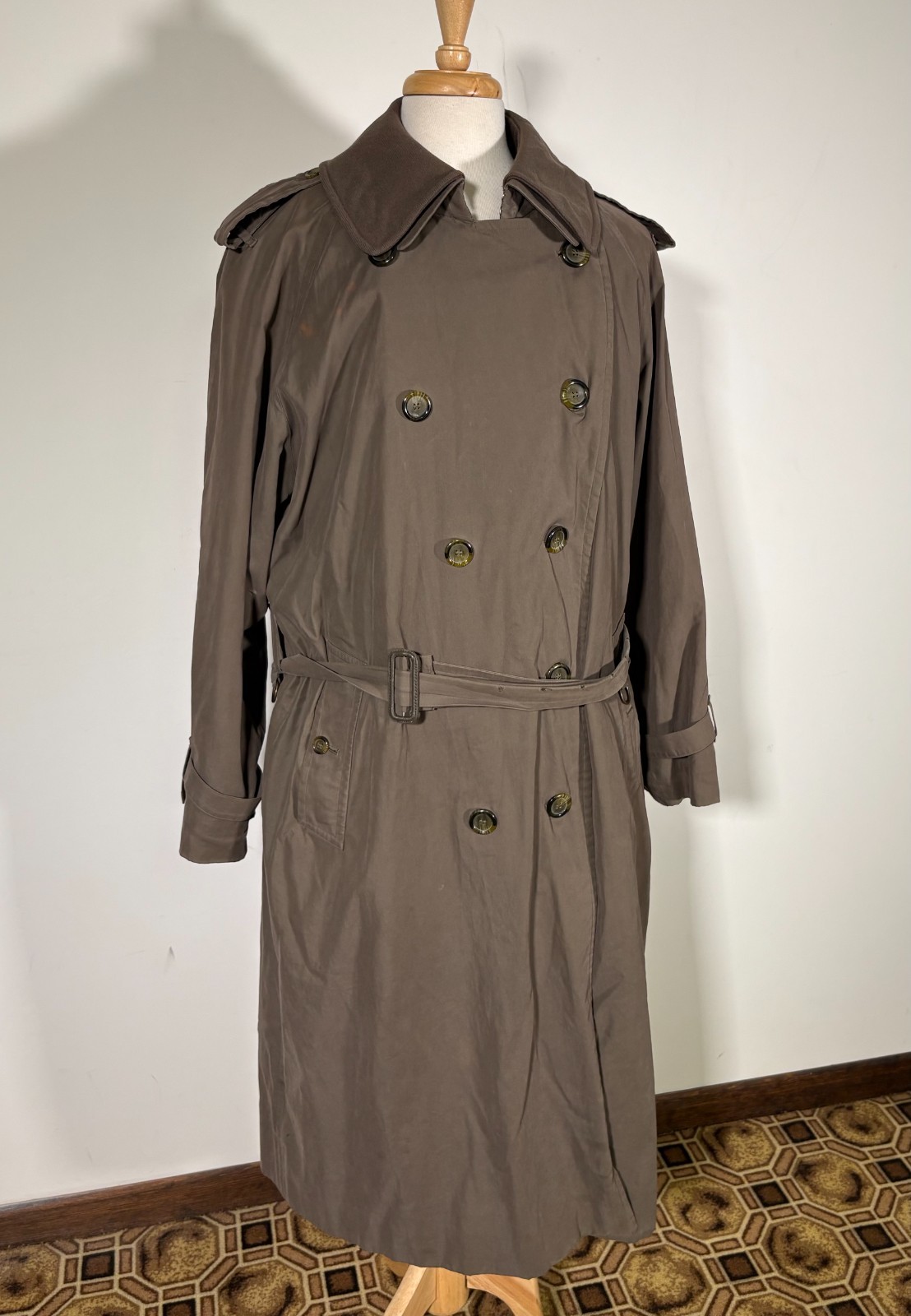
The liner and the belt are the two parts of a trench that go missing first, and a coat without them is worth a fraction of one that has both. This listing states it has both, which matters more than the asking figure does. 42R is also the most contested size on the used market, so a trench this complete landing at the bottom of the range is unusual and unlikely to sit long.
Belvest is a maker's name rather than a marketing one, and it does not carry the recognition on resale that its tailoring earns at retail. That gap is where the value is: buyers searching by logo skip it entirely. Read the listing carefully first, because a three-button jacket with side vents and a ticket pocket is a sport coat, not outerwear, and it will not do the job the other five here do.
Silk in a wool blend gives cloth a faint sheen and a softer hand, and gives up some abrasion resistance in return, which makes it a coat for offices rather than commutes. The 42L is doing most of the work on this price: long sizes have a fraction of the buyer pool of regulars and sit unsold for months. If you are tall, this is the corner of the market where you are competing against almost nobody.
Pea coats are the most copied shape in menswear, so the label on the inside does less work here than on anything else in this list. What varies between a good one and a cheap one is the weight of the cloth and the room through the armhole, neither of which a listing photo will tell you. A US 44 is at the roomy end of the standard range, so this suits a broader chest rather than someone hoping to size up for layering.
Storm System is Loro Piana's own weather treatment, applied to the cloth rather than added as a separate lining, and it is the reason these coats command what they do new. It is also the part that ages: the treatment is bonded to the fabric and does not survive rough handling or repeated dry cleaning indefinitely. Treat the size of this gap as a question rather than an answer, and ask for close photographs of the cuffs, the zip and the inner label before you bid.
The judgment worth building here is the ability to read a low price as information. A coat is cheap because it is a long, or a 44, or the thousandth black overcoat listed that month, or because something is wrong with it, and only the last of those should stop you. Ask the seller for measurements at the shoulder and the sleeve before you bid, because on a used coat those are the two dimensions a tailor cannot easily give back to you.