Luxury wool and cashmere at a fraction of retail Secondhand gems that outclass the mainstream price point
At $200 to $250, secondhand knitwear from Loro Piana and Brunello Cucinelli competes with new mall-brand wool on price and beats it on fibre.
13 Aug 20264 min
The $150 to $250 band is where the secondhand market stops competing with new mainstream clothing and starts beating it outright. That money buys a machine-knit blend built to a cost from a mall label, or it buys a knit from a house whose name still means something in the fibre trade. The second option is not a reward for patience; it is a structural feature of how knitwear resells.
Sweaters are the worst-performing category in luxury resale. Sizing is Italian and unfamiliar, condition is difficult to photograph, and a knit has none of the liquidity a watch or an outerwear piece carries. Add a colour outside the core neutrals or a size at either end of the run and the listing sits.
That is the whole opportunity, and it means the work of buying well is inspection rather than searching. Every piece below is priced where it is for a reason you can identify before you pay.
Capolavoro is a Loro Piana cloth name, and the listing puts it into a zip hood rather than the tailoring where buyers expect to see it. Maurizio Baldassari is an Italian maker most American searchers have never typed into the box, which is most of the reason this sits at a third of the stated retail. Look closely at the hood lining and the cuff ribbing in the photos before committing.
Notice that the listing leads with the yarn and not the label, which tells you how much recognition Oliver Lattughi carries on the open market. Loro Piana sells yarn to knitters who are not Loro Piana, so judge this the way the seller has framed it: the fibre is a known quantity, the house is not. In brown at a medium, it is a plain wardrobe sweater rather than anything a collector will bid against you for.
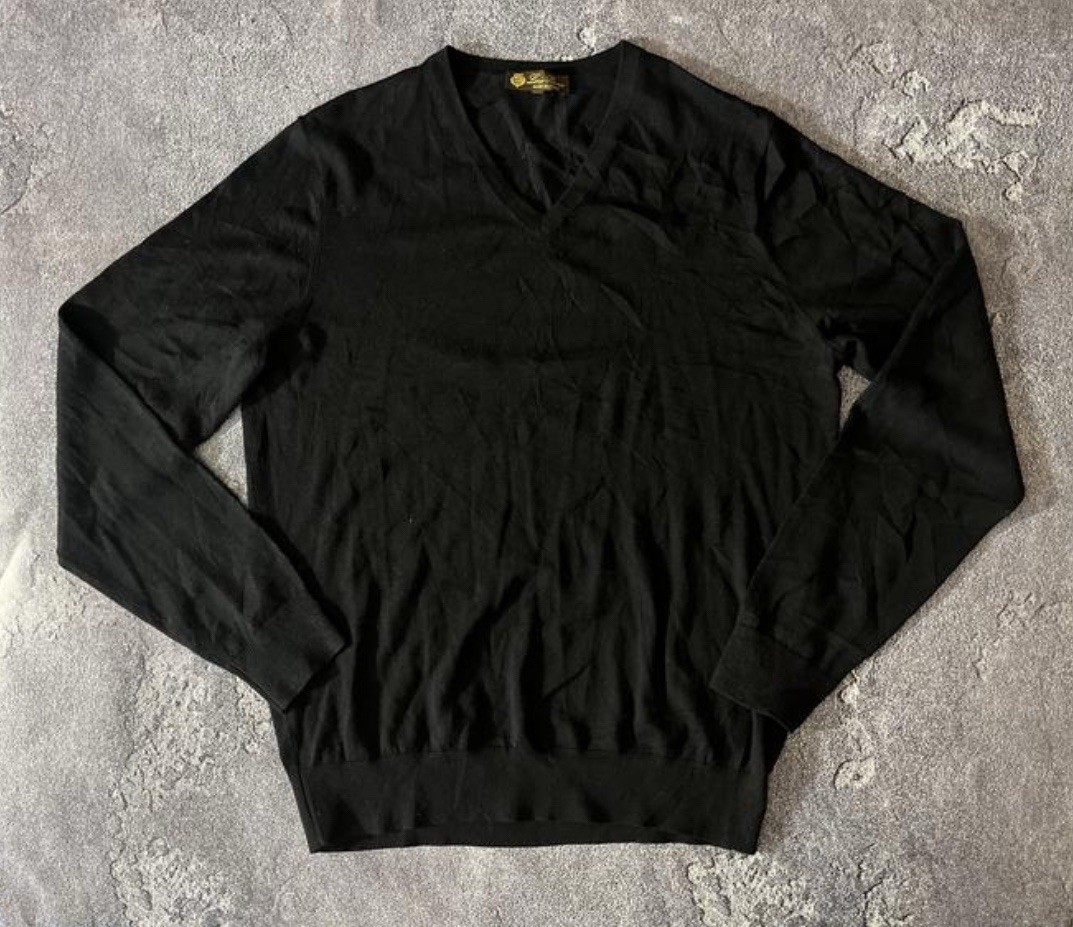
This one carries the name on the label and shows the widest cash gap in the group. Size 54 is Italian, which lands around a US 44 chest, so the L/XL in the title is generous for anyone sitting between sizes. A black V-neck is also the most replaceable shape the house makes, and replaceable shapes clear low.
Colour is doing the pricing here. Bordeaux narrows the buyer pool in a way black never does, and an IT 50 medium in a vintage turtleneck narrows it again. Ask about thinning at the elbows and along the neck fold, which are the two places a turtleneck of this age gives out first.
Size 58 is the entire story. That is a genuinely large Italian cut, somewhere around a US 48, and the overlap between people who want a Cucinelli cashmere turtleneck and people who fit one is thin enough to hold the listing where it is. For a buyer in that range this is the most fibre per dollar on the page; for anyone else it is a tailoring project not worth starting.
Retailer exclusives such as this Bergdorf Goodman full-zip get read as second-tier by the resale market, because buyers scan for the label and not the account it was made for. A wool and cashmere blend also holds up harder than straight cashmere, which makes this the most wearable of the six rather than the most impressive. Zips are where knitwear fails, so confirm the slider runs clean along its whole length.
None of these is a bargain in the sense of a seller mistake. They are priced where they are because the sizes are Italian, the labels are quiet, or the colours are narrow, and each of those is a condition you can check in advance. Ask for flat measurements across the chest and the sleeve, request photos of the underarms and cuffs, and buy the one that fits rather than the one with the widest gap to retail.