Luxury tailoring for the price of a department-store blazer
Six women's blazers listed between $159 and $250 against retail figures ten times higher, and a look at what actually drives the gap on resale.
22 Aug 20264 min
$150 to $250 is the price of a competent new blazer from a department-store label. It is also, on any given week, the price of a used one from a house that sells the same garment new for ten to twenty times that. Both statements are true at once, and the second is not a reward for diligence.
The gap exists because resale prices are set by demand for a search term, not by what a garment is made of. A jacket with no visible branding, in an awkward size, sold as half of a suit nobody wants the other half of, will clear low regardless of how it was built. That is the whole mechanism, and it is more boring than it sounds.
What follows is six listings in that bracket. The useful question for each is not whether it is a good jacket, which the label mostly settles, but why this particular one is cheap, because the answer tells you what you are taking on.
Beige, notch lapel, three-quarter sleeve, single button: the listing reads plain, and that is close to the point. The Row prices its tailoring near four figures and puts a logo nowhere on it, which is precisely what hurts a listing like this on resale, where the search term does most of the selling. At $170 against a $2,300 retail figure, the discount is a function of anonymity rather than condition.
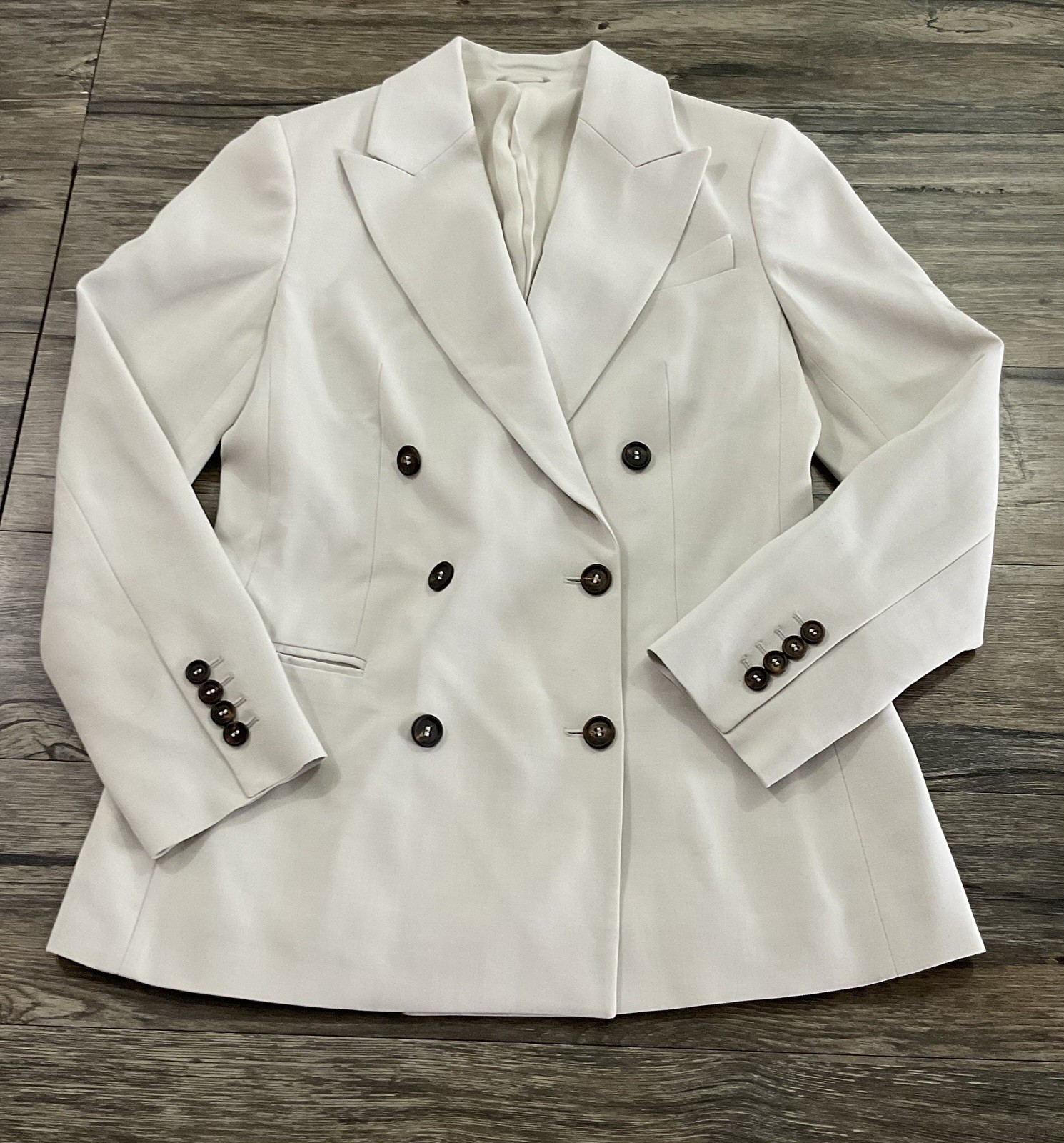
Double-breasted cuts move slowly on the secondary market because they are harder to judge by eye and less forgiving through the chest than a single-button jacket. An Italian 38 is a US 2 or 4, so the flat measurements matter more here than the size tag does. Cucinelli sits at the top of the Italian ready-to-wear market, which is what makes $225 a wide gap even before the cut is accounted for.
Two-piece suits are the reliable soft spot in this category. Buyers want the jacket and inherit a skirt they will not wear, sellers price the pair as one lot, and the effective cost of the blazer lands below what the same jacket would fetch listed alone. Charcoal and a wool-angora fabric are Max Mara's home territory, and the $195 here buys both pieces, not one.
Nothing in this listing states what the fabric is, which is worth knowing before spending $250 at the top of the bracket. The $4,000 retail figure is the sort of round number a seller reaches for rather than reads off a tag, so treat it as a claim and ask what the garment actually is. A US 8 is also the size that surfaces most often, so waiting for a better-documented example costs very little.
Akris is the least recognised name on this list outside the people who already buy it: a St. Gallen family firm that has dressed professional women for decades without ever chasing the attention the Italian houses get. That obscurity is the discount, since fewer people search the brand at all. A jacket and dress together at $199 also asks the fit question twice over, so measurements for both pieces are worth requesting before bidding.
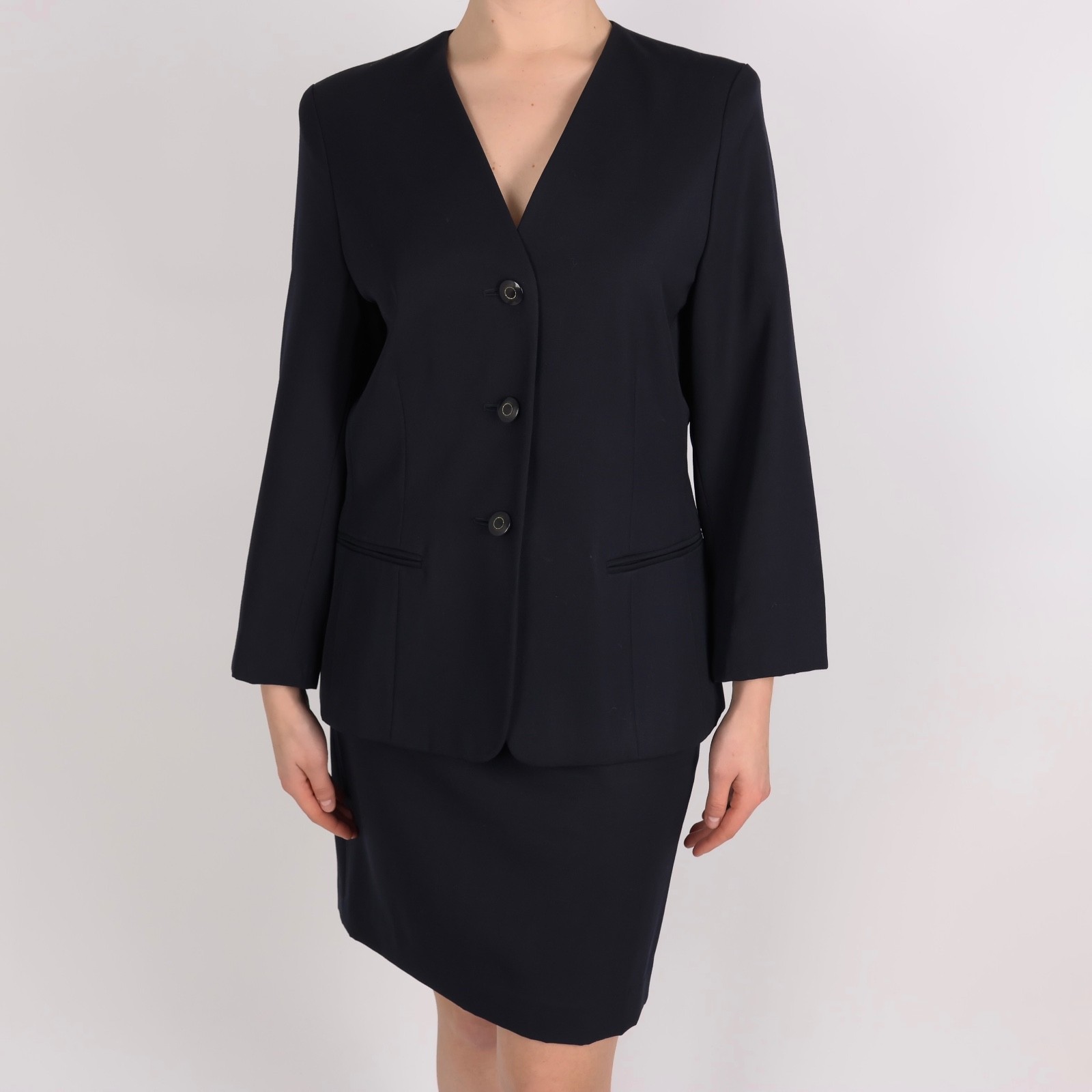
Black wool is the workhorse of the category and the hardest thing to photograph well, which is part of why this one sits at the bottom of the price range here. It is sized L rather than by an Italian number, so the seller is guessing and you should not. Wool of any weight goes shiny at the seat and the elbows before it goes anywhere else, and those are the areas to enlarge in the photos.
The pattern across all six is that the discount tracks something other than the garment: a missing logo, an unfashionable second piece, a brand people do not think to search for. None of that shows up once the jacket is on. What it does mean is that the verification work shifts to you, so ask for flat measurements, read the condition notes twice, and be willing to let a listing go.